Memorial Creator and Author Chris Coverdale has been passionate about the airfield and the squadrons stationed there for over 30 years. His new book, currently in the making, profiles the history of RAF Downham Market. The book includes a dedicated losses profile and photos of the personnel stationed there during 1942-1945. Chris Coverdale: "My aim with the book is to increase awareness of RAF Downham Market's history and raise funds from the sale of each book, which will be put to supporting the long-term maintenance and upkeep of the memorial, so it can always look its best". Former RAF Downham Market is no longer an RAF station. Now, transformed back into farmland, it is very hard to understand how the place once looked as an RAF Bomber Station without the aid of these historical photos and aerial photos. If you look closely enough, some of the former base buildings are still there, 80-plus years on, and their survival highlights the site's enduring legacy and the importance of preserving this memorial for future generations.
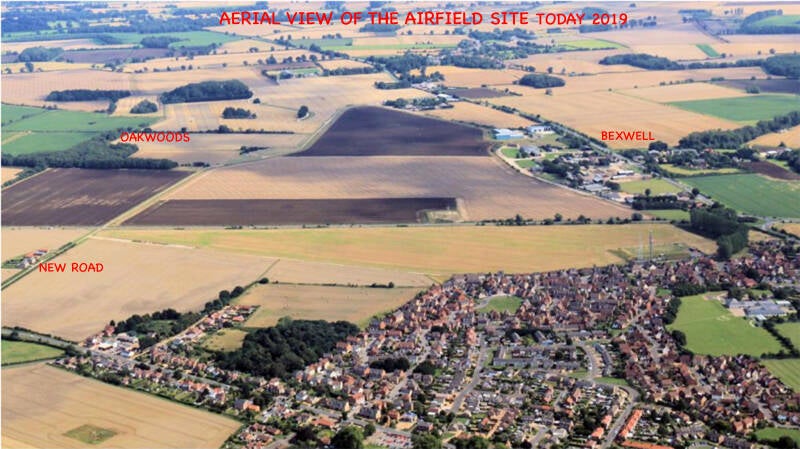
Airfield Technical Site, now Bexwell Industrial site, was acquired in 2000. Copyright Chris Coverdale
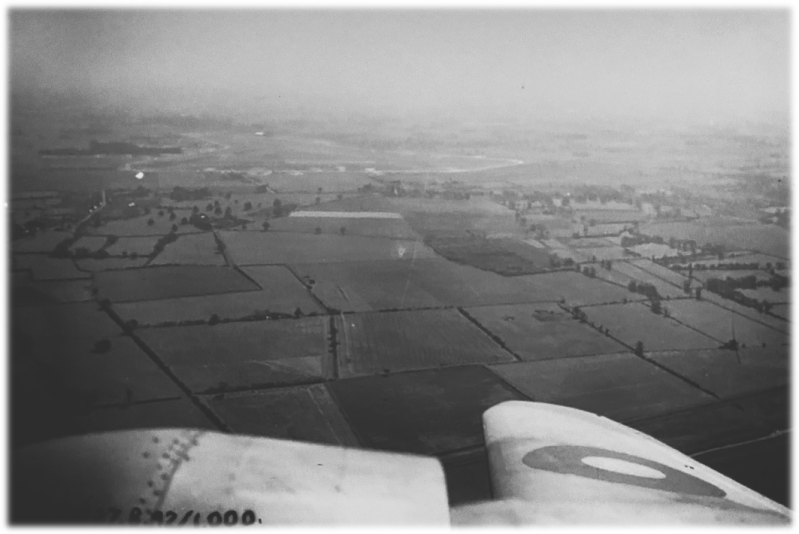
218 Squadron Stirling flying around RAF Downham Market, which can be seen in the distance. The outline of the airfield perimeter, which tracks the wooded area known as Oakwood, can clearly be made out.
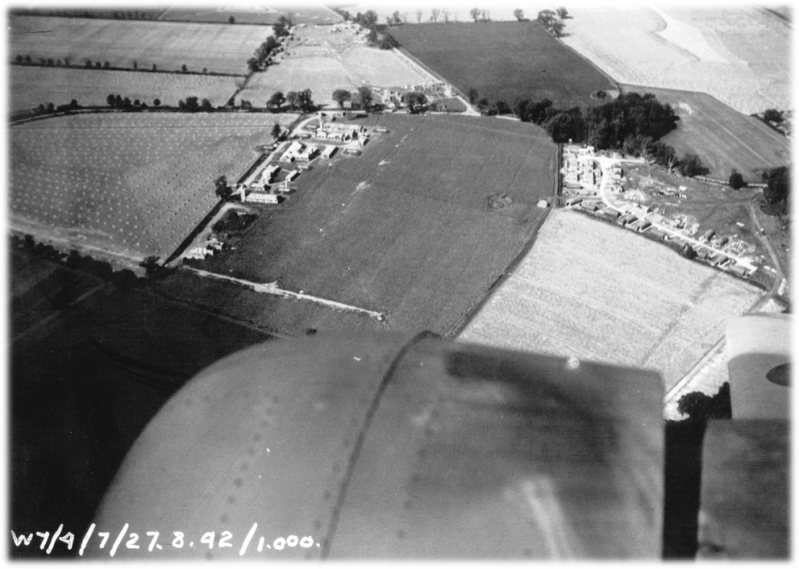
218 Squadron Stirling flying around RAF Downham Market 27th August 1942, which can be seen flying at 1,000 ft over the first phase dormitory & communal sites at Stone Cross near Bexwell.
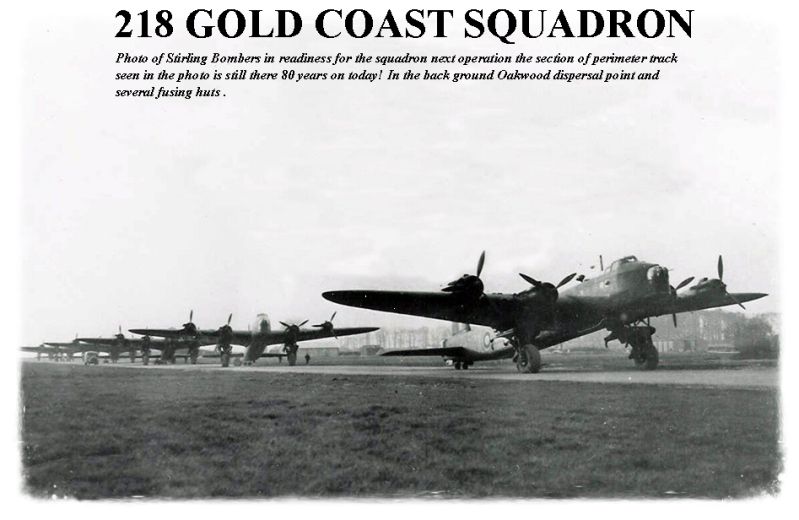
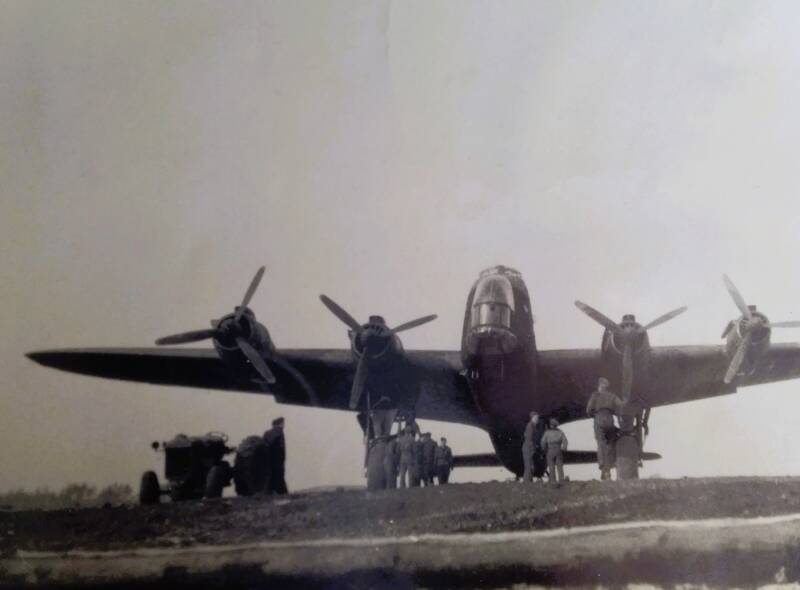
Stirlings of No. 218 (Gold Coast) Squadron are lined up on the Oakwood perimeter track.
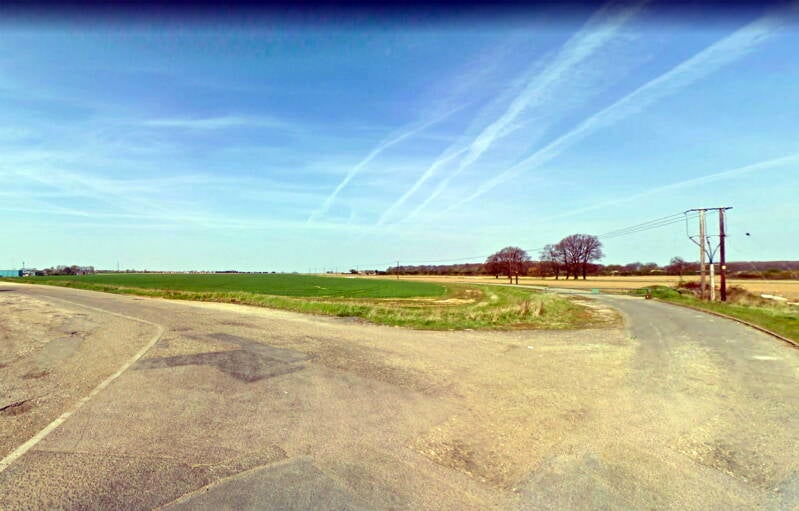
The Stirling Bombers are aligned on the perimeter track, which, if you follow the telegraph poles in the 2022 photo, is where the Stirling Bombers above are located. The horseshoe-grass area is where the Downham Market Airfield Memorial stands today, in 2026.
One of my favourite 3 Group Stirling Photos, showing how the Stirling Bomber stood tall in appearance. Known correctly as the Short Stirling, which was crucial, robust, and highly manoeuvrable. In Winston Churchill's mind, "it was a Giant. The Stirling played a crucial role in Bomber Command's (1941 - 1943) Bombing campaign against the enemy. During July 1942 - February 1944, 93 Stirlings were lost in action while stationed at RAF Downham Market. During operations for Bomber Command, Pilots Praised the Stirling for its ability to out-turn enemy night fighters and its favourable handling characteristics, but sadly, its low ceiling was often criticised. From late 1943, the Avro Lancaster and improved Handley Page Halifax bombers were the main bombers used to strike key enemy targets. The Stirling was relegated to second-line duties: gardening (Mining), glider pulling, and SOE operations.
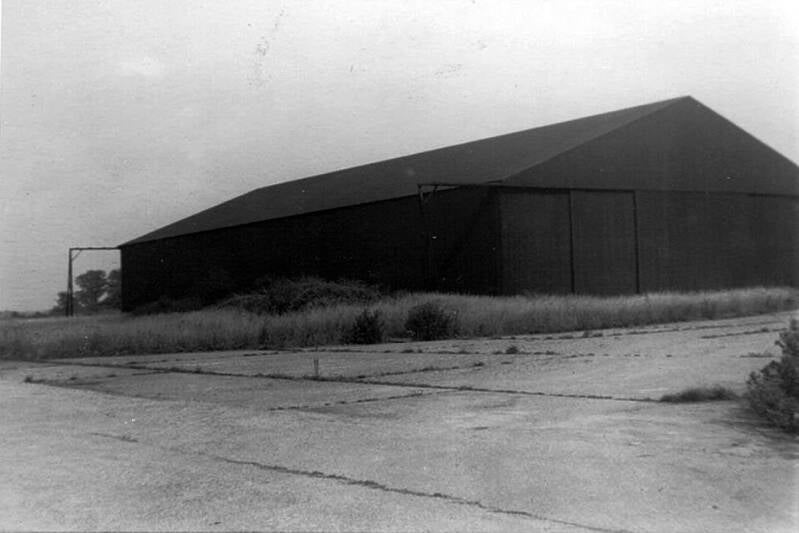
Maintenance Hangar at the Technical Site, RAF Downham Market, before it was demolished in the 1960s
This Page is under construction